Give three people the same AI tool and you can get three very different results: useful work, a polished mistake and a subscription that barely gets opened.
If you run a business or lead a team, that leaves you with a problem. You’ve provided the tools, but people still work to different standards. How do you help everyone get useful results, recognise mistakes and share what works?
I wanted a consistent answer at Scorchsoft, the software company I founded. So I created The AI Stairway™: a practical online AI course for people at work. Its ten main modules take learners from getting useful results themselves to sharing good methods across a team and planning tasks that AI can carry out with clear checks.
It grew out of a straightforward requirement. I wanted training I would be happy to put my own team through, with lessons they could apply when they returned to their desks.
Why I built an AI course for my own team
At Scorchsoft, we build apps, portals and AI products. I’m often the person people come to with AI questions, and I still build tools myself. That gives me plenty of opportunities to find out where AI helps, where it goes wrong and how much the instructions change the result.
Over time, I’d built up lessons about briefing AI, checking its work, rescuing a conversation that had gone off course and deciding when a task needs proper software behind it. Much of that knowledge lived in my head, in individual conversations or with whichever colleague had discovered a useful technique.
I wanted a consistent way to teach it.
When I looked for training, a lot of what I found, particularly among the free resources I tried, fell short of what I wanted. Some covered the absolute basics and stopped there. Some already felt dated. Others taught the buttons in a particular platform, which is useful until the buttons move.
I needed a course that developed people’s ability to use AI on real work, including the judgement to know whether the result was any good. That became the starting point for The AI Stairway™.
AI training should change the work people produce
Someone can explain how AI generates an answer and still struggle to get a useful result from it. An impressive demonstration only helps so far if the learner cannot repeat it on their own work.
Take a report. An inexperienced user might type, “Write me a report on this,” receive a plausible answer and spend the next hour repairing it.
A stronger user supplies the source material, identifies the audience, explains the decision the report needs to support and defines what a finished result should contain. They ask the AI to identify missing information before drafting. Then they check the claims that matter against the original sources.
The tool may be the same. The person’s approach changes the quality of the work.
That’s what I mean by becoming an AI power user: someone who can set a task up well, choose an appropriate tool and judge what comes back. They also know when to stop and do something another way. Having a very long chat history is not, on its own, a professional qualification.
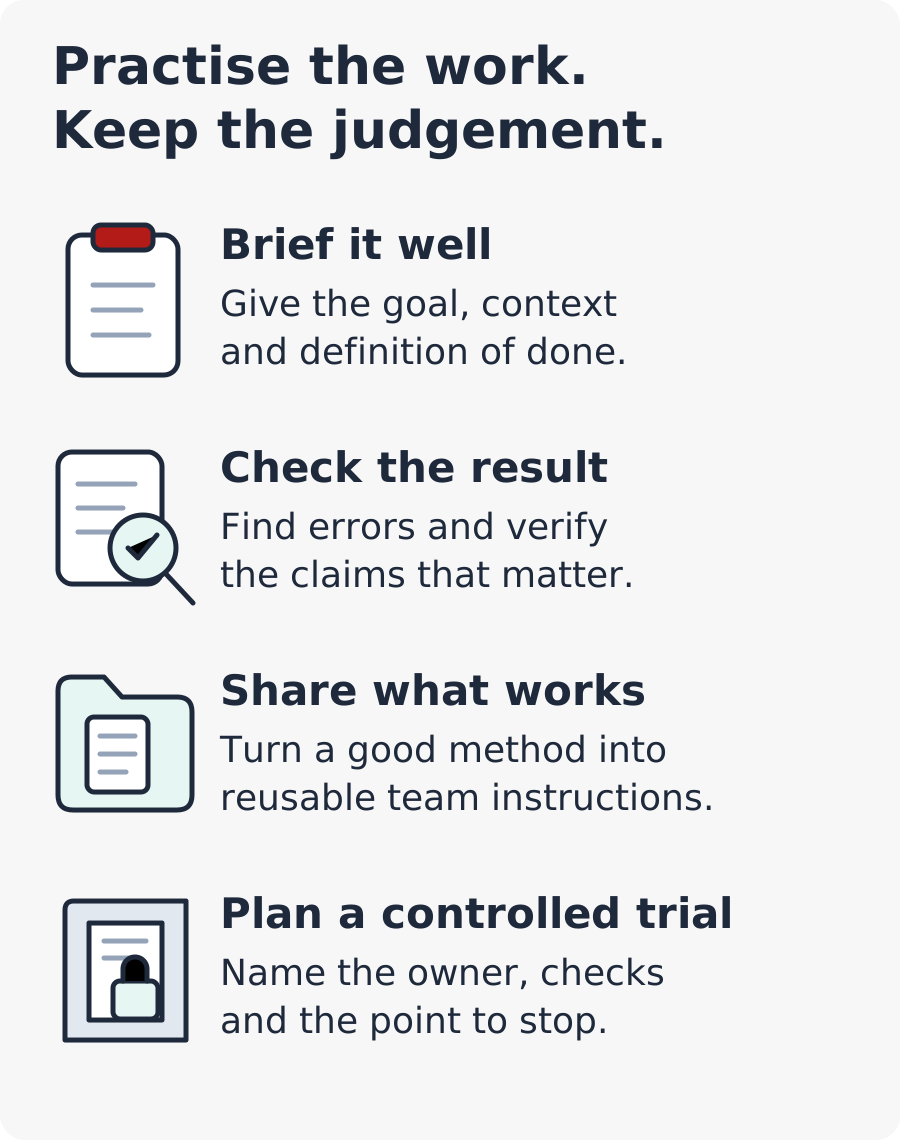
The exercises in the course ask learners to make those decisions. They might rewrite a weak brief, find an invented reference or decide how much checking a particular output needs. Each exercise gives them something to practise beyond the lesson.
What’s in The AI Stairway? From first prompt to team workflows
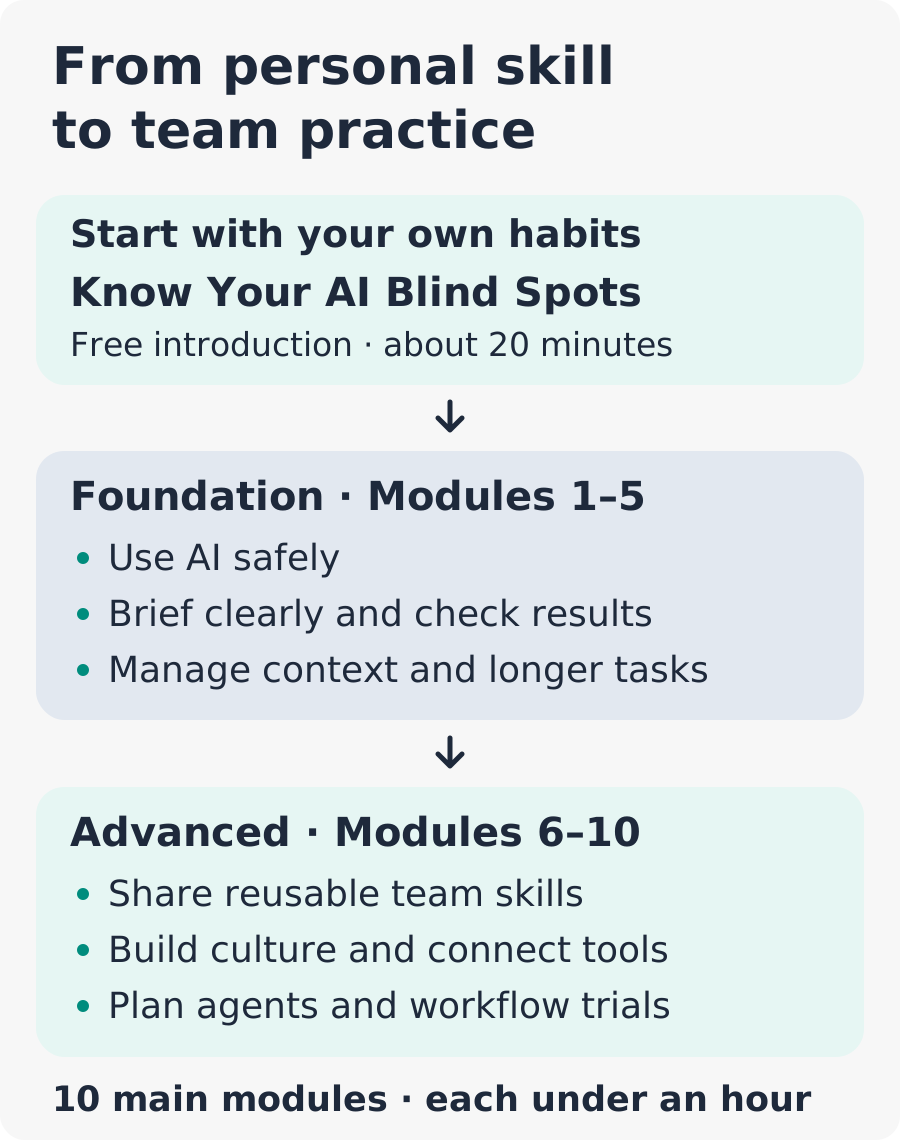
The course has a separate introductory module, followed by ten main modules split into Foundation and Advanced series. Each main module takes under an hour, including its check, and the lessons can be taken in separate sittings.
Foundation: get useful work from AI
Modules 1–5 develop the habits behind dependable personal use: deciding what is safe to share, writing clear instructions (prompts), checking answers and getting finished work from AI. They also cover stronger instructions and managing context, which means the information an AI has available while it works.
Advanced: share good methods and plan automation
Modules 6–10 move into reusable team skills, agreed rules and forming an AI culture. Learners then explore connecting AI to the systems they use, giving it tasks and deciding what it may do on its own. They learn when an instruction is enough and when software must enforce a rule (through access permissions or code). The course ends with planning a small trial of a repeatable process, or workflow, with clear checks and a way to measure whether it helps.
I wanted the teaching to travel between tools. Specific features need current guidance, but the ability to explain an outcome, supply useful context and check a result should survive a change of platform.
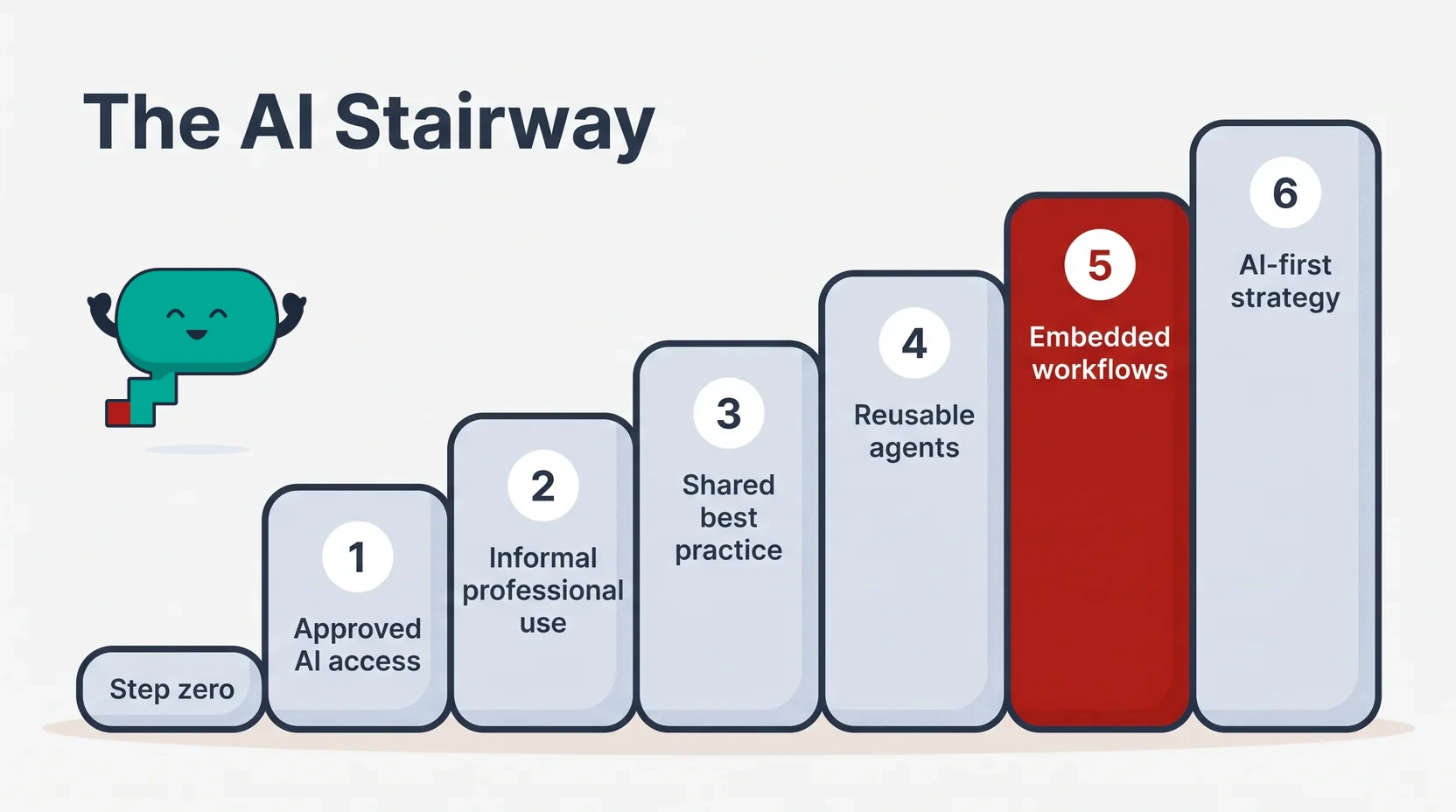
The wider Stairway model shown at the top of this article describes how AI becomes part of an organisation, including stages that also need technical systems, agreed rules and someone responsible for the result. The course prepares learners to describe a repeated task clearly, decide how AI could help and plan a trial with appropriate checks.
See the course in two minutes
This is the introduction from The AI Stairway™ homepage, covering the problem I wanted to solve and how the course approaches it.
Watch the introduction on Scorchsoft.
How individual AI skills become a team AI culture
If one colleague gets excellent results but nobody can explain or repeat their method, the business still depends on that colleague.
I wanted our useful discoveries to become shared working habits. When someone finds a good way to review a document, prepare a brief or research a problem, we should be able to write it down, give it an owner and let other people improve it. We should also know what information we can share, which tools we can use and who checks the output.
That’s what an AI culture looks like to me in practice: colleagues can show each other what worked, admit what went wrong and ask for help without feeling foolish.
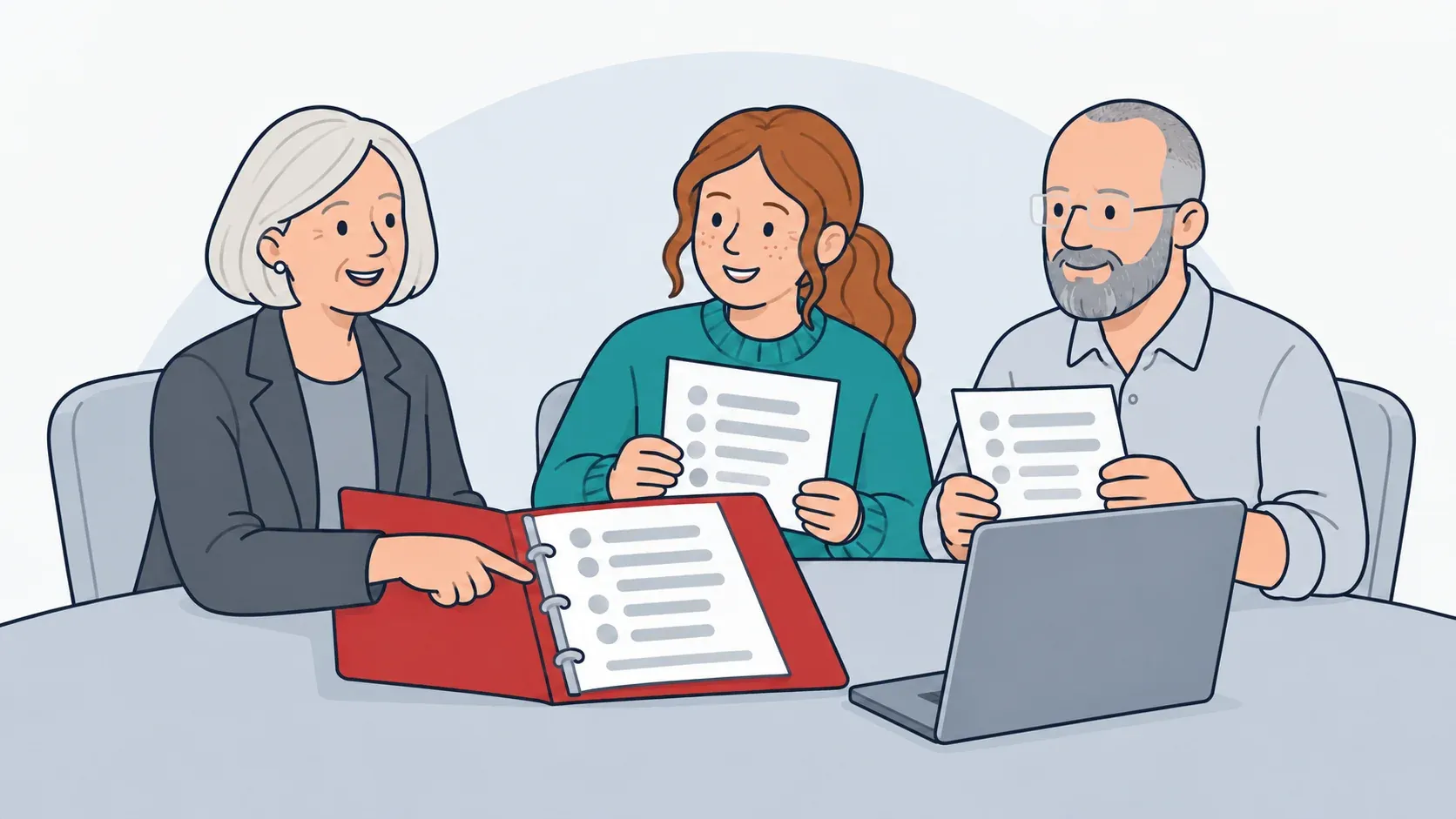
The course’s fictional personas illustrate a shared method: colleagues can explain, repeat and improve what works.
That takes more than telling everyone to “use AI more”. People need time to practise and a reason to trust the process. If a colleague worries about their job, a manager owes them an honest conversation. If someone spots an error, I want them to flag it early, rather than hide it because the business has become enthusiastic about AI.
Fear and uncertainty can leave people avoiding tools that might help them. They can also push experimentation out of sight, where nobody knows which information is going where. Clear expectations and practical experience give people a better basis for deciding what to use and when.
For a manager, that means making room for people to share a useful method and discuss a mistake, as well as paying for the tools.
Why AI agents need people who understand the work
As a software company, we can build AI systems that use connected tools to carry out tasks (often called agents). We can also make them part of a larger process, such as preparing a customer response for someone to approve. The people using and overseeing those systems still need enough understanding to question a result and recognise an exception.
Imagine an AI assistant that prepares a customer response using information from several systems. Someone has to define a good response, decide which information it may access and set the point at which a person must approve it. Someone also needs to notice when the answer looks polished but is wrong.
If the team hasn’t developed those habits on smaller tasks, a larger system can amplify the confusion.
Technical work and training can happen together; you can start an AI project while people develop their skills. Those carrying responsibility need the understanding, authority and support to do their part.
That’s why I care about the foundations. They help people describe the work, ask sensible questions and shape the changes their organisation makes.
How the learning fits around a working week
The course website lets people choose a pace, work through lessons in separate sittings and return to where they left off.
I want learners to leave enough space between lessons to try something at work and discover where they get stuck. For a team leader, that also means protecting some time for practice. Completing a module and applying its lessons are two separate jobs.
The website has two jobs: explain the course to visitors and give signed-in learners access to their lessons and progress. I built it as a lightweight web application (using Astro and Cloudflare Workers), with separate services to store the course files (Cloudflare R2) and keep records such as accounts and learning progress (PostgreSQL, connected through Cloudflare Hyperdrive).
The course files follow a common e-learning standard (SCORM), so learning software can record progress, scores and completion. Those choices support the practical things a learner needs: opening a lesson, completing an exercise and picking up where they left off.
Try the approach in 20 minutes
The free introductory module, Know Your AI Blind Spots, helps you identify habits that may be costing you and try three practical fixes in your own AI tool. It takes about 20 minutes.
You can start with the free introductory module, or explore The AI Stairway™ for your team.
The standard I wanted for my own team is the same one I’d suggest you use when choosing training: what will someone be able to do better when they return to work?