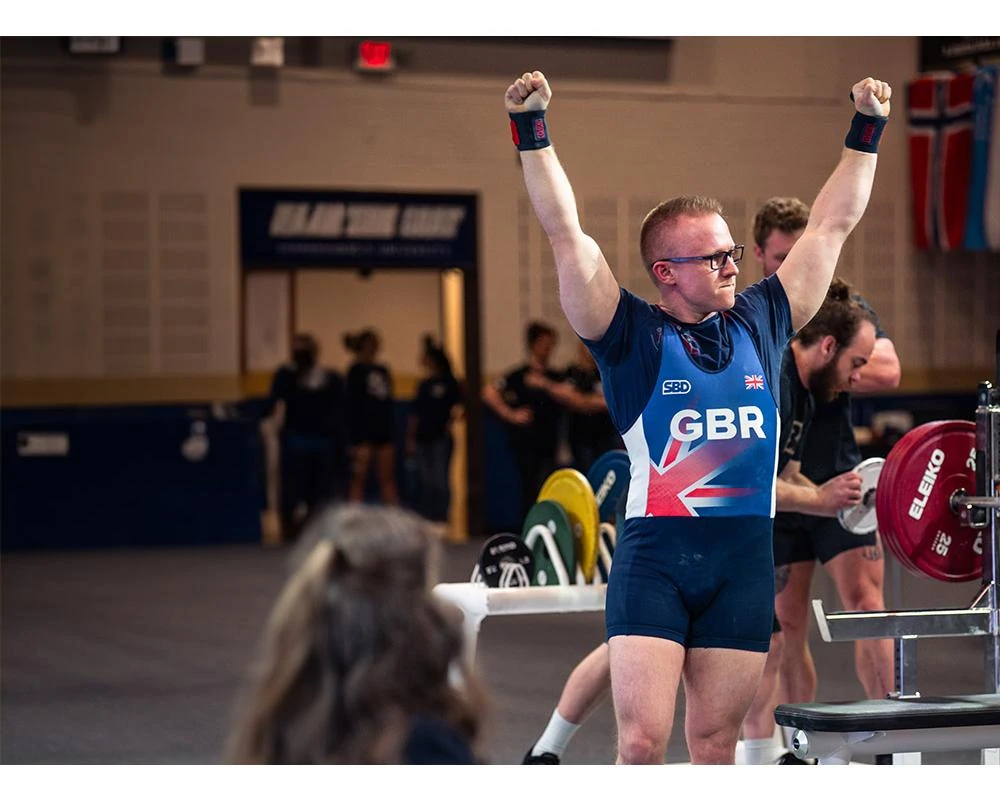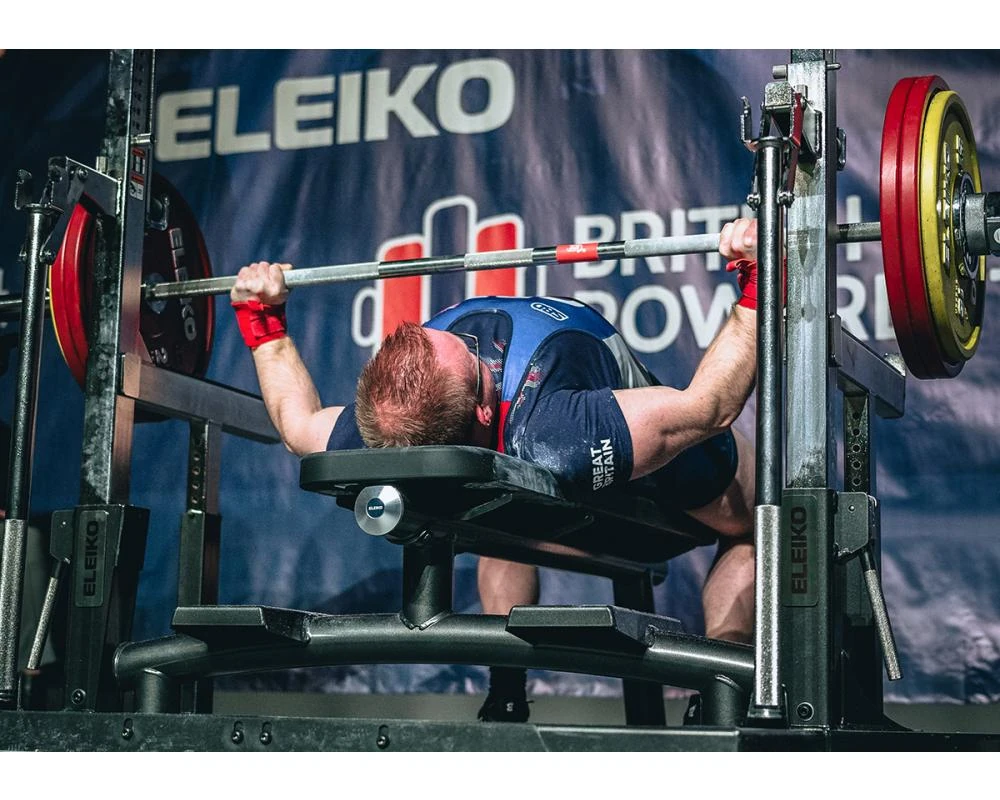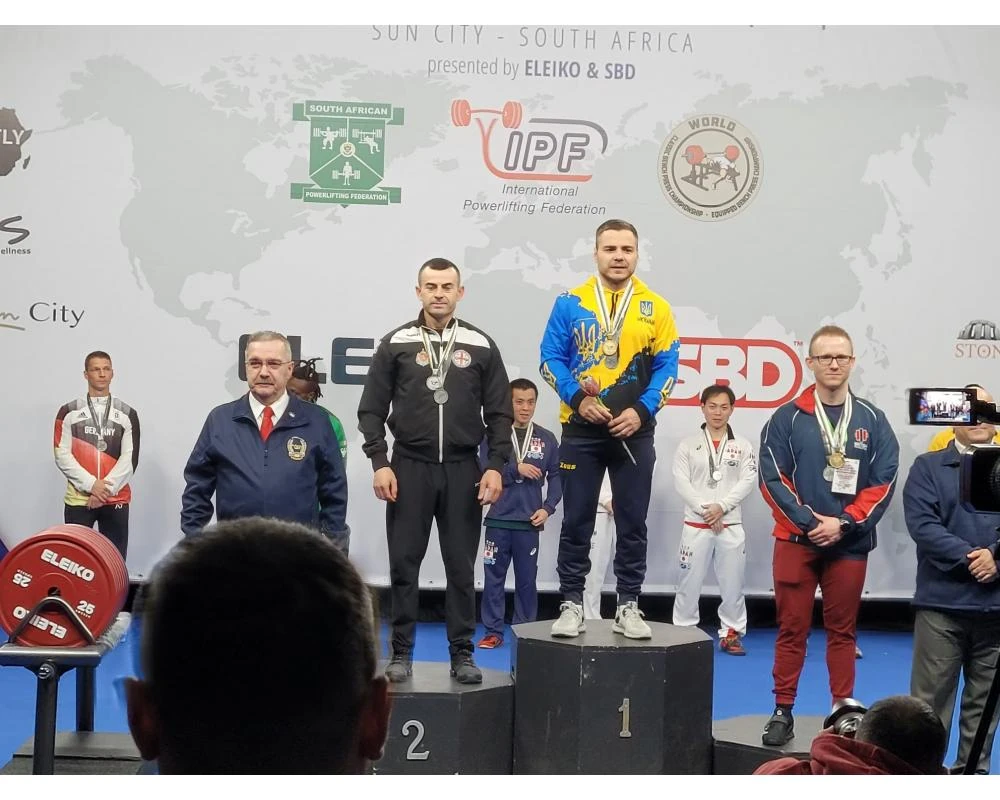
This summer I put up new shelves in the office, so I dug out the medals and trophies I’ve collected from years of competing. Laying them out, I found I could remember each one. The ones from international competitions mean the most: Lithuania, Budapest, Kazakhstan, South Africa and Texas.
Why I stepped back from competing
I haven’t competed since the 2024 World Championships in Texas, where I pressed my 175 kg competition best. (My best in the gym is 180 kg.) Part of the reason is the hip replacement I had two weeks after Texas. The other part is that I needed the mental energy I’d been pouring into powerlifting for other things, work above all.
My training has changed too. For years it was almost all bench press; now I’m building my squat and deadlift again. I’m still good at them, but not at the British or international podium level I reached on the bench.
The break has done me good. It reminded me that I enjoy powerlifting for its own sake. Competitions are fun, and they’ve given me some great experiences, but there’s something motivating about simply showing up and getting a little better. At 38 I’m still lifting, and I’ve started thinking about what a good run in the Masters categories, which start at 40, could look like.
What I’ve done for British Powerlifting
How I got involved
When you compete internationally, you see how much of the sport runs on volunteers. Referees, loaders, spotters and the people on the table give up whole weekends so lifters like me can compete, and you become very grateful for it. I’d always wanted to give something back.
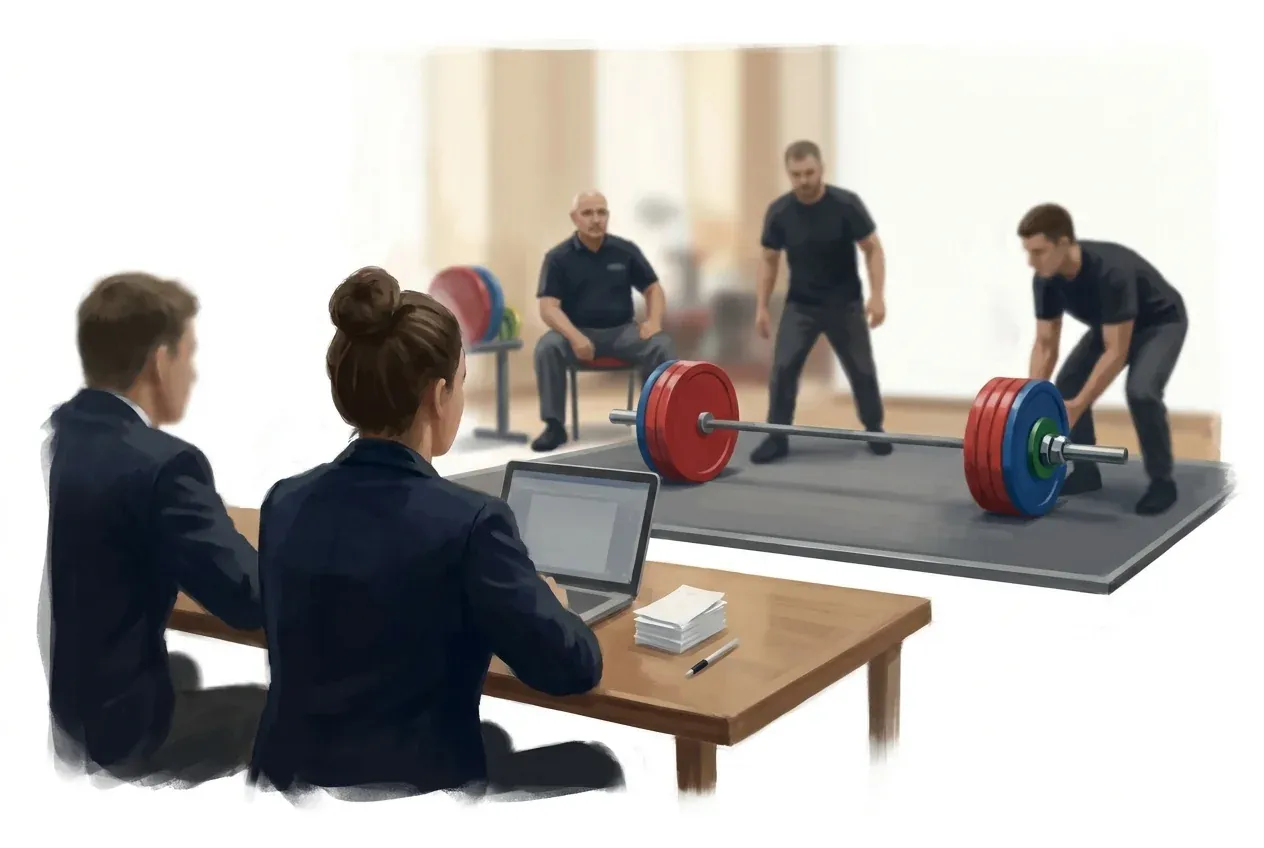
My first go was on the table at the British Junior Classic Championships in May 2022, held at the Gymshark Weightlifting Club near Birmingham, practically on my doorstep. The table is where lifters hand in their attempt slips and the competition is run from, so I learned how a meet actually works behind the scenes.
Illustration
I’m not tall, so spotting and loading were never going to be my strength. And I soon realised the table and the back office were where I could do the most good. My skills in software, systems and governance are rare, and expensive for a federation to buy. An hour of my time on those can do more than a few days of loading bars. I miss some of the social side you get at a competition, but I try to put my volunteering hours where they have the most leverage.
What I’ve done for British Powerlifting
British Powerlifting is the national federation for the sport, and over the last few years, and this year especially, I’ve been heavily involved behind the scenes. When I shared this on Instagram in August, I said I thought I’d made a quiet but significant difference. Written down, the list looks like this:
- Email and collaboration. I moved the federation’s 50-plus email addresses from an old server to Google Workspace. More on that below.
- Volunteers and data. I set up how volunteers join and handle data, and helped launch Team Digital, a new volunteer programme.
- Payments. I set up automatic invoicing for international team places.
- The website. I helped rescue a website project that had stalled, and moved it onto British Powerlifting’s own server during an emergency weekend.
- General meetings. I’ve supported the annual general meeting three years running, and this year I built the voting system for it. I also proposed two governance changes that members passed by large majorities at the 2026 AGM: FastVote, a single-issue members’ ballot that needs shorter notice than a full EGM (92 for, 3 against), and changes to the process for a vote of no confidence (86 for, 3 against).
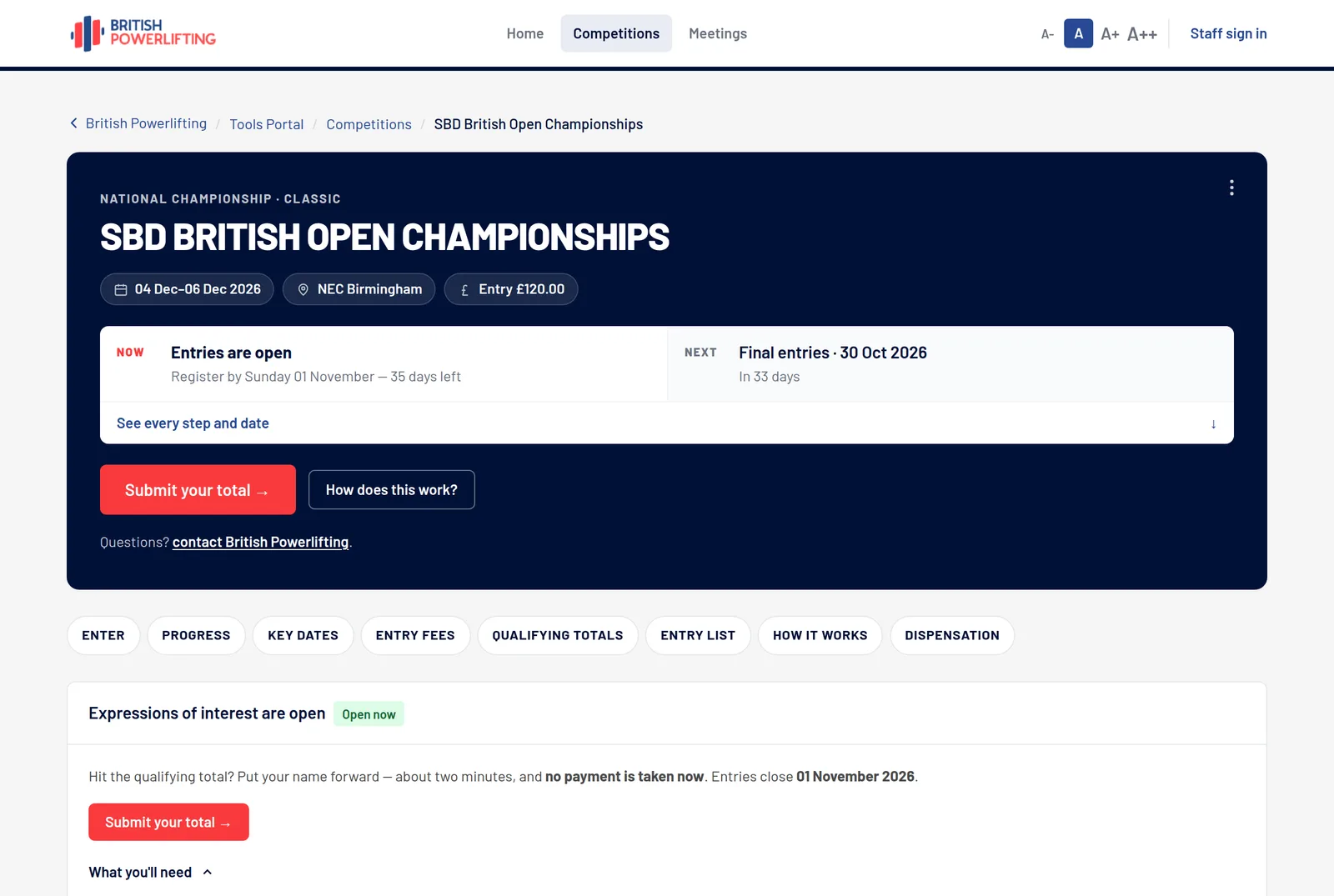
- Championship entries. I’ve just launched a new way to enter the national championships, starting with this year’s British Open.
- Advice. Along the way I’ve given the federation strategy, technical input and general guidance.
Email, data and volunteers
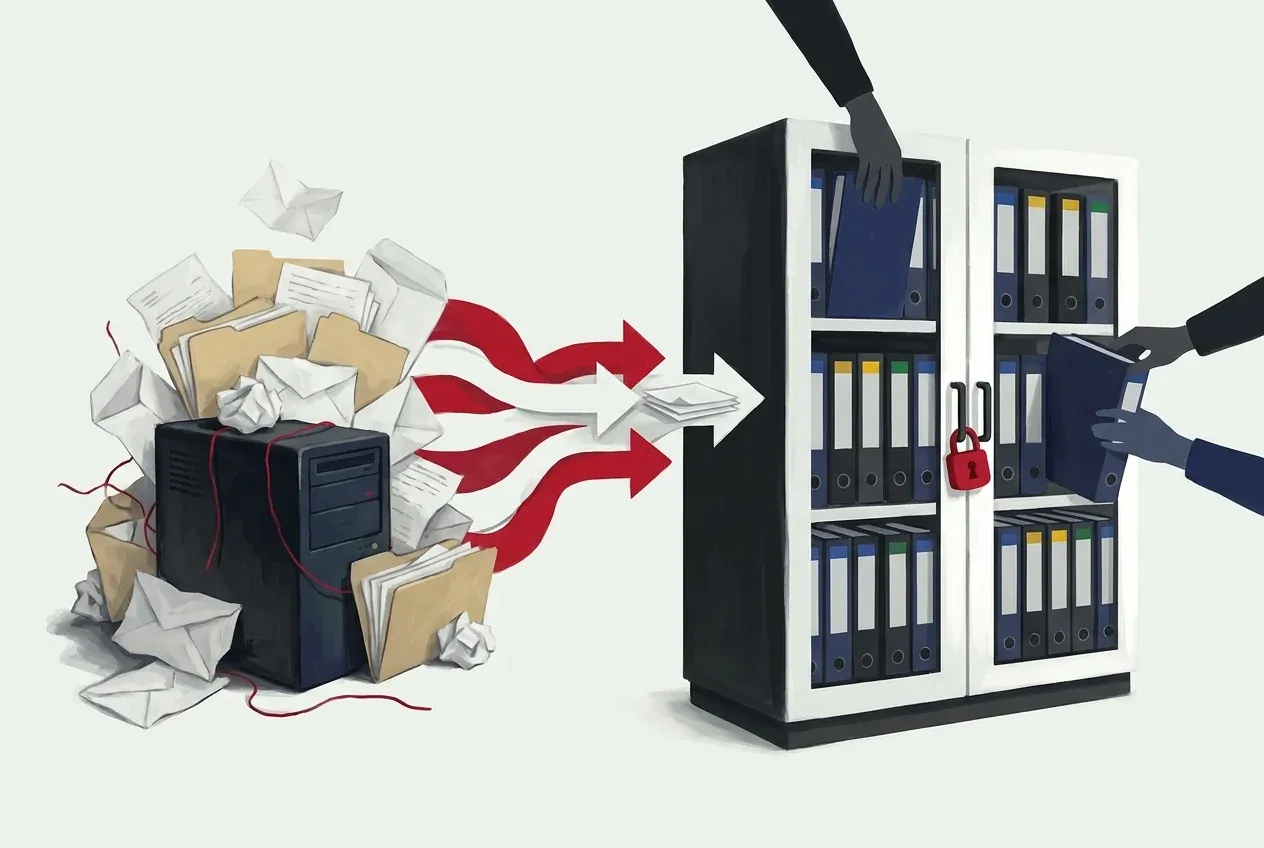
The federation’s email ran on a single cPanel server. It was short of space, it wasn’t set up for good deliverability, so some emails never reached their destination, and it had no tools for working together. People hated it. Volunteers would sign up, build up folders of files, and when they left, that knowledge left with them. Some people had set up rules forwarding their mail to personal inboxes, which raised questions about where member data was ending up. With the UK GDPR in mind, I wanted that in a much better place.
Illustration
Moving more than 50 addresses to Google Workspace fixed the basics: the federation now has one shared home for its documents, with groups, permissions, a proper hierarchy and shared inboxes. Before, there were only forwarding addresses, so nothing could be handed to a shared inbox, and every time someone came or went it turned into a mess.
The communications inbox needed its own fix. Every message sent to the federation landed there, and Abdul Butt, the communications director, was swamped. Together we set up a contact form that routes each enquiry to the right department, added better spam filtering, and put answers to the most common questions into FAQs on the website. Combined with email that actually arrives, the situation is much better.
Then I turned to the people. Volunteers now sign up through a form, and they agree to a volunteer agreement and a data agreement. Most volunteers use their own devices, so the data agreement sets rules such as a secure password policy, getting as close to the standard of Cyber Essentials, the UK government-backed security certification, as you can with people who volunteer casually on their own equipment. Access is tiered: some volunteers can work from a personal email address, but anyone who handles member data beyond a certain level must use a britishpowerlifting.org account. I wrote the policies and internal documents behind all of this, created welcome guides so new volunteers know what they’re doing from day one, and ran the onboarding emails.
The website weekend
The new website was a good piece of design work by the agency that built it, and I’d been closely involved in the design too. But the project had drifted, the kind of drift I write about in The Control Standard. Every issue took a long time to report and a long time to fix, and some large pages couldn’t be saved at all. Meanwhile the federation needed to publish updates and documents to keep running, and it couldn’t.

Illustration
I suspected the site’s shared hosting was part of the problem, so I cleared a weekend, set up a cloud server of its own on Amazon Web Services, with plenty of processing power and nothing else competing for it, and moved the whole site onto it. It worked. The federation ended its support contract with the original agency, and since then British Powerlifting’s website has run on its own infrastructure.
International invoicing, and a shout-out to Kim
Sending athletes to international championships means coordinating a lot of moving parts, hotels among them, and the payments had to be tracked and invoiced by hand. I worked with Kim Cowell, who manages the internationals process, to set up Xero, the accounting software, and linked it to a Google Sheet with a small script. Now Kim ticks what each athlete needs to pay for, presses a button, and the invoice is raised in Xero, where it’s easy to track.

Illustration
While I’m here: Kim is an absolute diamond. She’s a critical part of how British Powerlifting runs, she volunteers a huge amount of time, and most of it is invisible. If there were a volunteer award for the hours she puts in, she’d deserve it.
The Tools Portal
The general meetings and the championship entries both live in one place: the British Powerlifting Tools Portal, which I built.
Meetings and voting
It started with the AGM. The federation’s then chief executive asked me to help run it, because it’s a surprisingly technical job. You need a good working knowledge of the articles of association, the meeting runs through several stages, and every vote has to be tracked. My first version was a Google Sheets and Google Forms process. It worked, but it still needed a lot of manual steps.
After running it a few times, I had built up the kind of tacit knowledge that makes you the best-placed person to do the job. Handing that to someone who had never run an AGM would have been hard, and paying a developer to build a proper system was never going to be affordable for the federation. So I automated it myself.
Now members sign in with a link sent to their email, and each meeting runs in stages: motions are submitted, members comment on them, amendments come in, and then everyone votes. The portal handles every stage and the awkward edge cases, including proxy votes, quorum and a full audit trail, and it has how-to guides both for the people running the meeting and for the members taking part. Scorchsoft has written it up as a case study.

Illustration
I wanted to make governance approachable, because when members find it easy to take part, more of them do, and that’s better for the sport. When the federation first moved voting online, hundreds of members voted. Around 100 now typically take part in an AGM, out of a membership of roughly 5,000 to 6,000, which I think is a healthy turnout. One thing in particular bothered me. When meetings moved online, commenting on a motion meant filling in a form and having your comment published, with no way for anyone to reply. The discussion had gone. So I designed the portal to bring it back, with members able to respond to each other, while keeping the whole process within what the Companies Act allows.
Good governance is the foundation everything else in a federation rests on. When it’s in place, it’s invisible; when it’s a mess, it holds everything back. It also underpins the tiers of Sport England’s Code for Sports Governance. That’s why I’ve put so much into this part, including the constitutional changes above: I could see rules that were gumming up the federation, and I wanted to fix them at the root.
Championship entries
The competitions side is the newest part of the portal. Championship entries used to run on a Google Form and a spreadsheet, which meant a lot of fiddly admin. Someone had to check that each lifter had hit the qualifying total, cross-reference their membership number, and chase anyone who applied but didn’t pay, across several different ways of paying.
It got harder last year, when the qualification process changed and places became limited. If a lifter dropped out, there was no easy way to offer their place to someone else, so places went unfilled and the federation lost entry fees, even though there were members who would have loved the chance to compete.
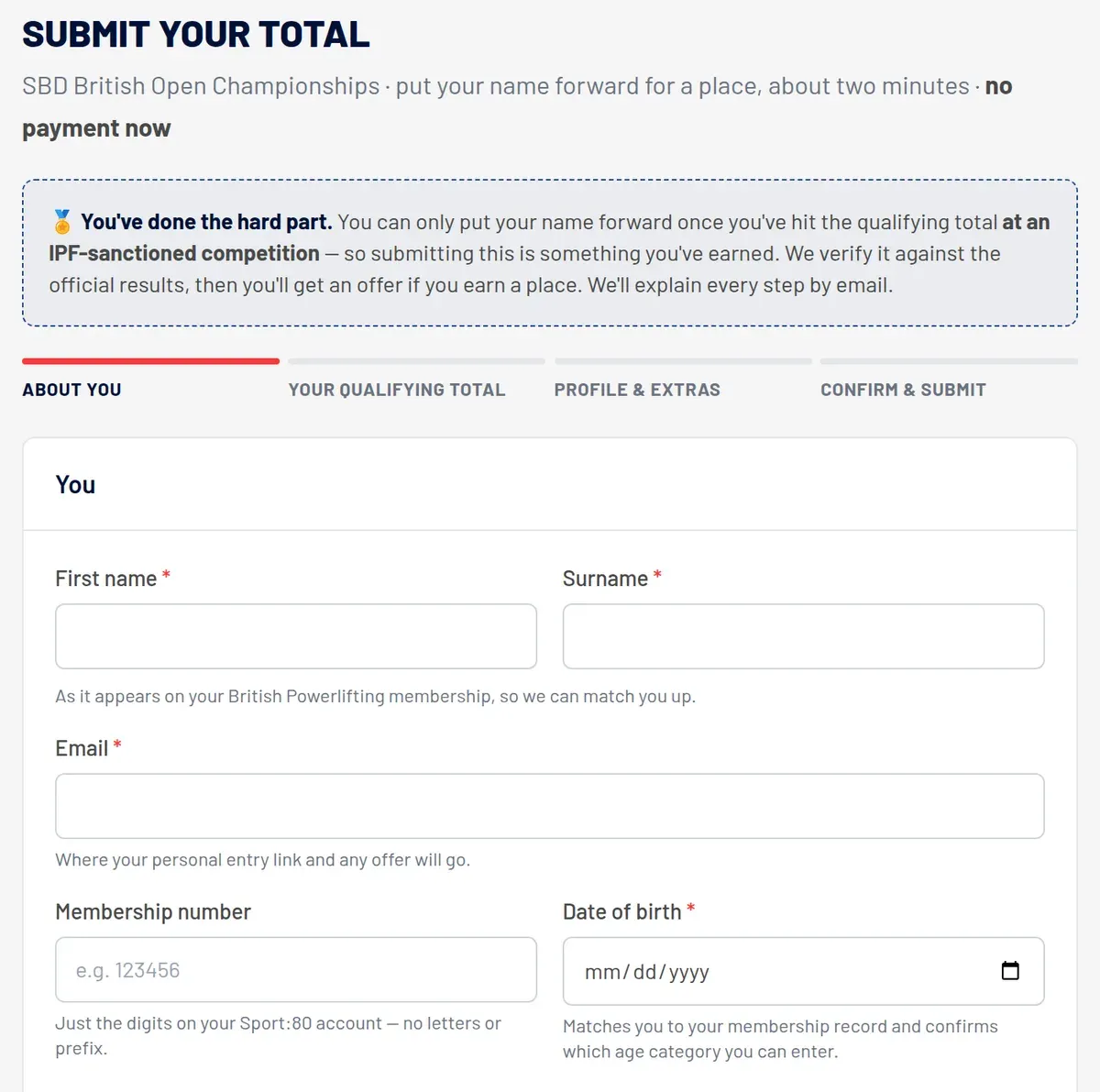
Now lifters put their name forward online in about two minutes. The portal checks their membership, collects the details needed to verify their total, and takes no payment until a place is offered. It’s designed so that when a place comes free, it can go to the next eligible lifter rather than sitting empty.
Governance at the right pace
A federation’s constitution has two layers: the articles of association, which are hard to change, and bylaws, which are meant to be easier. British Powerlifting is now reviewing its governance to simplify both, because some things sit in the articles that belong in the bylaws. When I looked at how other sports do this, I expected a common template, the way many organisations follow Robert’s Rules of Order for meetings. There isn’t one. Beyond the Companies Act and Sport England’s Code for Sports Governance, every federation has built its own.
That matters, because best practice is set with much larger sports in mind. They have the people and money to run it; a federation of British Powerlifting’s size might not. I think it’s important to move towards best practice with a realistic pathway, rather than jumping straight to rules the federation can’t yet support.
Term limits for directors are a good example. In 2025 there were motions that would have tightened how long directors could serve. The principle is sound, but at the time very few people were applying for board places, and the change risked forcing out experienced people the federation couldn’t easily replace. I proposed amendments, and in the end the motions were withdrawn and a governance working group was set up to look at it properly. I thought that was the right outcome.
The motions I’ve put forward since, like FastVote, try to do the same thing: encourage members to take part and help the federation act quickly, without adding complexity it can’t carry.
The people who keep it running
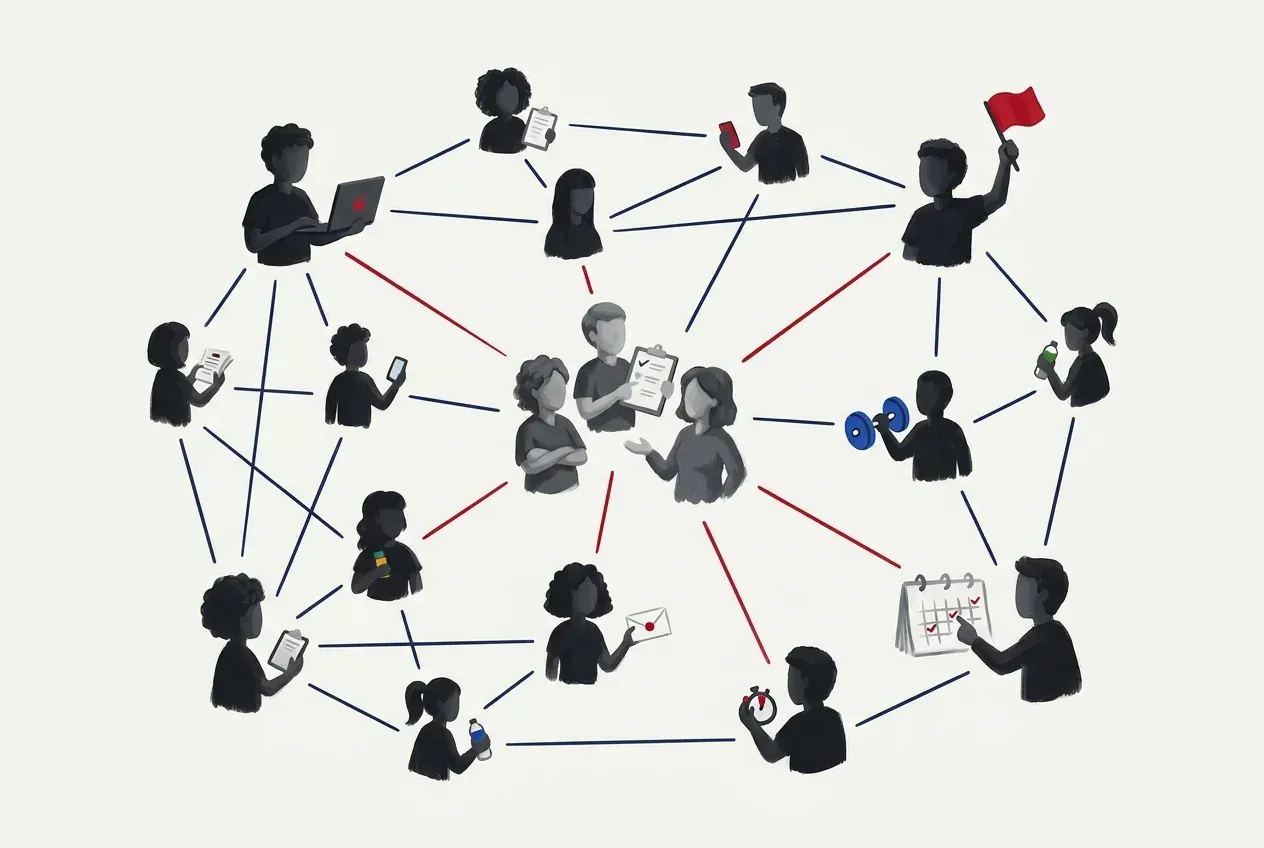
It would be wrong to write about my own contribution without mentioning the people who carry far more of the load. Most of their work is invisible to members, and I suspect the same is true in a lot of other sports.
Illustration
Look at British Powerlifting’s accounts and you’ll see an organisation with revenue of around £1 million a year. Add the volunteer network, and its footprint is that of a much bigger organisation. The people leading it have to coordinate all of that, and unlike in a business, almost nobody works for them full-time. They rely on a few hours here and there from volunteers, and when resourcing is unstable, problems float up to the most senior people. That’s why I supported this year’s AGM changes to pay for certain roles and raise membership fees: the federation needs to be sustainable.
- James Brincat-Smith, the previous chief executive, did the job alongside the performance director role, which is an extraordinary amount for one person. He put a huge amount of work in.
- Charlie Marillier took over as chief executive after James resigned. Until this year’s AGM the role was unpaid, and even now it’s part-time pay for what is really a full-time job. With Kim and the board, she has set up strong committees with clear ownership of each area, and she has been putting together a lot of the federation’s strategy. I don’t think members realise the depth and breadth of what she does.
- Tony Cliffe is, I joke, the man behind the curtain in The Wizard of Oz, in the best sense. He puts a great deal of effort in and is a critical part of how the federation works.
- Abdul Butt, the communications director, sits on the board and gives a huge amount of time to communications and coordination.
- Fraser Montgomery, the chair, brings a senior business background and real experience of chairing. You could see the difference at this year’s AGM: he reached out to everyone who had submitted a motion or amendment, made sure they understood the process and were happy with it, and kept everything within the articles.
- Kim Cowell, as above, deserves every bit of credit.
It’s been good to be part of a growing sport. I hope it keeps growing, and a strong club strategy could be one way to get there. With the team it has now, I’m optimistic.
Why I do it quietly
I’ve deliberately kept all of this in the background. I don’t want a leadership role, and I don’t have the time for one. It’s a hobby.
When you run a business, it’s work, work, work, and your skills only ever go into the business. Volunteering gives me somewhere to apply them where no money changes hands. I don’t track the hours. It’s evenings and weekends, sometimes half a day, sometimes a few minutes, whenever something needs doing. And the leverage is huge: the impact far outweighs the time I put in, and work like this would be very expensive for the federation if it had to pay for it. I see that as a real contribution to the sport.
It’s easy to forget the impact when you’re busy doing the work, so it’s good to say it out loud and reflect.
If you’d like to help your sport the same way, British Powerlifting lists its volunteer vacancies on its website.